You want to try authentic Chinese food. You are staring at a menu full of names you do not recognize. The safe orange chicken is not there. Chinese cuisine is vast but it is not a test. Some of the best dishes are also the most approachable.
At Shanghai Taste in Rockville, MD, we cook Shanghainese food, a regional cuisine that fits American palates without trying.
1. Xiao Long Bao (Soup Dumplings)
Pork in a wrapper. You know that combination. The soup inside is the surprise: hot, savory, and pure comfort. No spice unless you add chili oil yourself.
Pick up with chopsticks, place in your spoon, bite a small hole, sip the soup, dip in vinegar, eat. (Full technique in our soup dumpling guide.) You will taste savory pork broth, tender ground pork, a hint of ginger and Shaoxing wine.
2. Scallion Oil Noodles (Cong You Ban Mian)
Four ingredients make this dish: wheat noodles, scallion-infused oil, soy sauce, fried scallions. No mystery proteins. No unfamiliar textures. Pure savory comfort.
Fragrant scallion oil hits first. Dark soy follows. A slight chew from the noodles anchors each bite. This is the dish that taught us simplicity wins.
3. Sheng Jian Bao (Pan-Fried Pork Buns)
The dumpling that converts skeptics. Bottom: crispy and fried. Top: soft and steamed. Filling: seasoned pork. Finish: sesame seeds and scallions. You bite through a crunchy base into juicy pork. Nothing else on the menu does that.
These share DNA with XLB but deliver a different satisfaction. Where soup dumplings are refined, Sheng Jian Bao announce themselves. Read more in our dumpling types guide.
4. Shanghai-Style Chow Mein
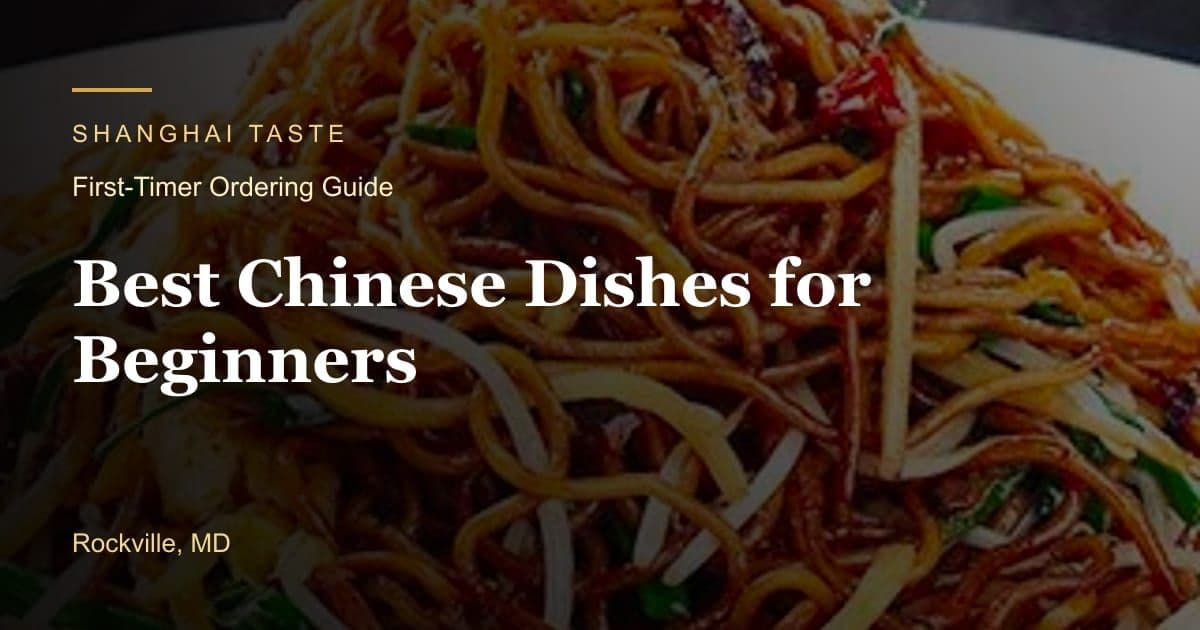
Stir-fried noodles with pork and vegetables. Closest to what an American-Chinese restaurant serves, but with restraint. No cloying sauce. No candy-sweet glaze. Chewy noodles, soy-based seasoning, vegetables that still have bite.
5. Red-Braised Pork Belly (Hong Shao Rou)
Pork belly braised in soy sauce and sugar until a spoon cuts it. If bacon or carnitas make sense to you, this will too. Shanghai's version is sweeter, glossier, and more tender than any pork belly dish you have had.
The technique: dark soy, rock sugar, Shaoxing wine, star anise, hours of low heat. The fat renders. The sauce reduces to a glaze. You eat it over rice and wonder where this dish has been all your life.
6. Cucumber Salad (Pai Huang Gua)
Smashed cucumber with garlic, vinegar, and sesame oil. The smashing matters: it fractures the flesh so the dressing seeps into cracks rather than sliding off. Refreshing, crunchy, and the right counterweight to rich dishes like red-braised pork belly.
Order this even if you do not like salads. It is less a salad and more a palate reset between heavier plates.
How to Order
Chinese meals are shared family-style. Order 2 to 3 dishes per person, put them in the center of the table, and everyone takes from each plate. Rice comes on the side. Use it to balance stronger flavors.
Start with XLB as an appetizer. Add scallion oil noodles as your main. Throw in a cold appetizer for contrast. That is a complete first-timer meal that costs under $25 per person. You will leave wondering why you waited so long.
Browse our menu and plan your first authentic Chinese meal.
Frequently Asked Questions
What should I order at a Chinese restaurant for the first time?
Start with Xiao Long Bao (soup dumplings) as an appetizer — they are approachable, fun to eat, and illustrate what Shanghainese cooking is about. Add scallion oil noodles (Cong You Ban Mian) as a main. Include a cold appetizer like cucumber salad for contrast. That three-dish combination costs under $25 per person and gives a complete picture of the cuisine.
Is Shanghainese food spicy?
No. Shanghainese cuisine is not spicy. It relies on a sweet-savory balance using dark soy sauce, rock sugar, and Shaoxing wine rather than chili heat. This makes it one of the most accessible Chinese regional cuisines for people who are sensitive to spice.
What is family-style Chinese dining?
Family-style dining means the table orders several dishes together and everyone shares from communal plates. You take one portion at a time from the center. Rice is served individually; everything else belongs to the table. This is how Chinese meals are traditionally eaten and is standard at authentic Chinese restaurants.