What Is Shanghainese Cuisine? A Guide to Shanghai's Food Traditions
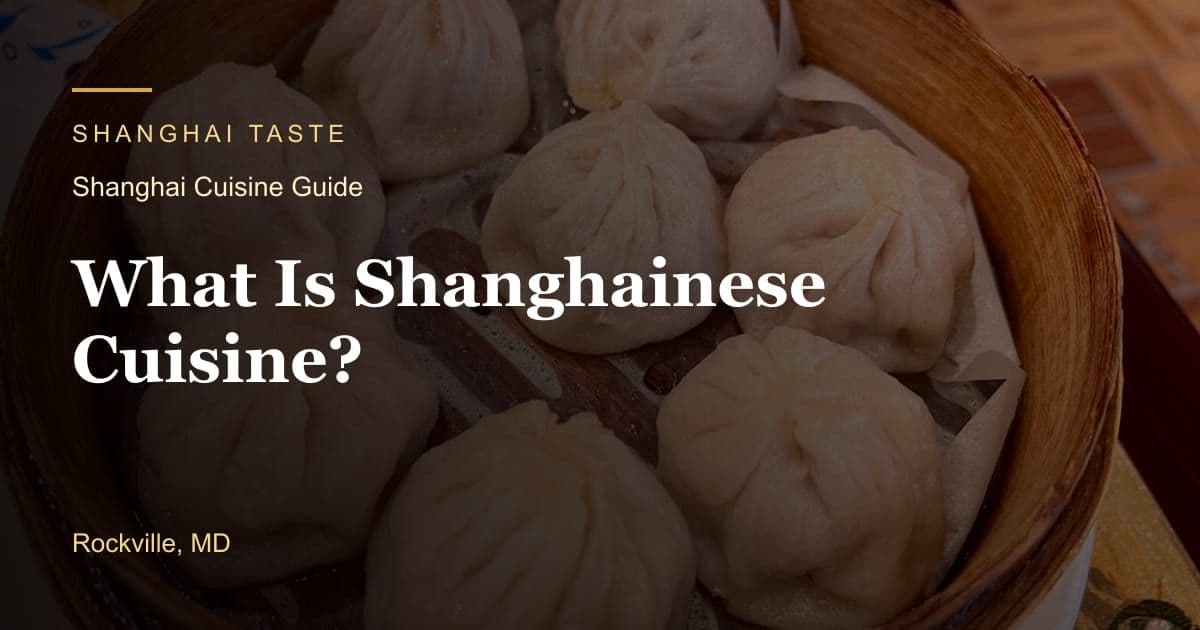
Shanghainese cuisine is the regional cooking tradition of Shanghai and the surrounding Yangtze River delta, built on a signature sweet-savory balance of dark soy sauce, rock sugar, and Shaoxing rice wine. It is best known for handmade soup dumplings (Xiao Long Bao / 小笼包), pan-fried pork buns (Sheng Jian Bao / 生煎包), red-braised meats, freshwater seafood, and delicate cold appetizers. Unlike fiery Sichuan or Hunan cooking, Shanghainese food is never spicy. It relies on richness and balance rather than heat, which makes it one of the most approachable Chinese regional cuisines for first-time diners.
When people think of Chinese food, they picture Cantonese dim sum or Sichuan hot pot. But tucked along China's eastern coast sits one of the country's most refined culinary traditions: Shanghainese cuisine. Known for its balance of sweet and savory, its obsession with freshness, and its legendary soup dumplings, Shanghainese food has become one of the most beloved regional Chinese cuisines in America.
At Shanghai Taste in Rockville, MD, we cook the dishes Shanghai families have passed down for generations.
What Defines Shanghainese Cooking?
Shanghai sits at the mouth of the Yangtze River, where freshwater meets the East China Sea. The geography shaped the cuisine in three ways.
Sweet-savory braising forms the backbone. Dark soy sauce, rock sugar, and rice wine slow-braise meats until glossy and tender. The classic: Hong Shao Rou (red-braised pork belly). Rich. Caramelized. Savory. A single cube of it over rice can ruin you for other pork dishes.
Freshwater seafood sets Shanghai apart from Cantonese cooking. Where Guangdong reaches for saltwater fish, Shanghai cooks use river fish, eel, and freshwater shrimp. Steamed whole fish, ginger, scallions: this is what a Shanghai dinner table looks like.
Oil as foundation, not grease. Scallion oil. Chili oil. Rendered pork fat. These are the flavor bases, not afterthoughts. A dish like scallion oil noodles (Cong You Ban Mian) uses four ingredients and tastes richer than anything four ingredients should be able to produce.
The Stars of Shanghainese Cuisine
Xiao Long Bao (Soup Dumplings)
Any discussion of Shanghainese food starts here. Xiao Long Bao are thin-skinned dumplings filled with pork and a rich aspic that melts into hot soup inside the wrapper. They steam in bamboo baskets. You eat them with black vinegar and ginger. At Shanghai Taste, we make ours by hand daily. Each dumpling gets 18 folds. Find them under Shanghai Dim Sum on our full menu.
Sheng Jian Bao (Pan-Fried Bao)
XLB are the refined older sibling. Sheng Jian Bao are the bold, crispy younger one. These thicker-skinned buns are pan-fried until the bottoms turn golden and crunchy, then steamed to cook the pork filling through. Sesame seeds and scallions on top. At Shanghai Taste, these pan-fried soup dumplings are a weekends-only specialty.
Cold Appetizers
Shanghainese meals start with small cold plates: smoked fish, marinated tofu, drunken chicken, cucumber salad with garlic. These dishes set the table's energy. Light, fragrant, meant to be shared. Our guide to Shanghai cold appetizers covers the classics.
Shanghai Noodles
Scallion oil noodles. Shanghai-style chow mein. Noodles are a cornerstone. They run thinner than northern Chinese noodles and come with simple, high-impact sauces.
Shanghainese vs Other Chinese Regional Styles
Think of the major Chinese cuisines as personalities. Sichuan is the loud one: heat, numbing peppercorn, dishes that demand attention. Cantonese is the perfectionist: fresh ingredients, light touch, nothing hidden. Hunan is the chili fanatic: hotter than Sichuan, no numbing buffer. Shanghainese is the one who understands balance. Sweet and savory. Tender and crispy. Rich and clean. It does not shout. It does not need to.
| Shanghainese | Cantonese | Sichuan | |
|---|---|---|---|
| Flavor profile | Sweet-savory, balanced | Light, fresh, subtle | Spicy, numbing, bold |
| Key ingredients | Dark soy, rock sugar, Shaoxing wine | Oyster sauce, ginger, fresh seafood | Doubanjiang, Sichuan peppercorn, chili oil |
| Heat level | None (mild) | None (mild) | High (spicy + numbing) |
| Seafood | Freshwater (river fish, eel) | Saltwater (shrimp, crab, fish) | Less prominent |
| Signature dishes | Xiao Long Bao, red-braised pork, scallion noodles | Dim sum, roast duck, steamed fish | Mapo tofu, kung pao chicken, hot pot |
| Best for new diners | Yes, approachable, no heat | Yes, familiar flavors | Depends on spice tolerance |
The soy sauce is darker. The sugar stays in the background. You get slippery noodles, crispy pan-fried bao, delicate XLB skins. Each dish earns its place.
Shanghainese is also the most approachable for diners new to regional Chinese food. Familiar proteins. No punishing heat. A sweetness that feels like an invitation. This makes it the right entry point to Chinese cuisine beyond the American-Chinese greatest hits.
At Shanghai Taste, we made it our mission to bring authentic Shanghai cooking to Rockville. No shortcuts. No fusion compromises. The food we grew up eating. Learn how to eat it family-style, or browse our menu to see what is cooking today.
Sources and Further Reading
Frequently Asked Questions
What is Shanghainese cuisine?
Shanghainese cuisine is a regional Chinese cooking tradition from the Yangtze River delta. It is defined by sweet-savory braising with dark soy and rock sugar, freshwater seafood, and handcrafted dumplings including Xiao Long Bao (soup dumplings) and Sheng Jian Bao (pan-fried pork buns). It is more approachable than Sichuan or Hunan cuisines, with no punishing heat and a natural sweetness.
What are the most famous Shanghainese dishes?
The most iconic Shanghainese dishes are Xiao Long Bao (小笼包, soup dumplings), Sheng Jian Bao (生煎包, pan-fried pork buns), Hong Shao Rou (red-braised pork belly), Scallion Oil Noodles (Cong You Ban Mian), and cold appetizers like smoked fish and drunken chicken.
How is Shanghainese food different from other Chinese cuisines?
Shanghainese cuisine uses darker soy sauce, rock sugar, and Shaoxing rice wine to create a characteristic sweet-savory balance. Unlike Sichuan food, it is not spicy. Unlike Cantonese, it uses freshwater ingredients rather than saltwater seafood. It is one of the most approachable Chinese regional cuisines for new diners.